About This Product
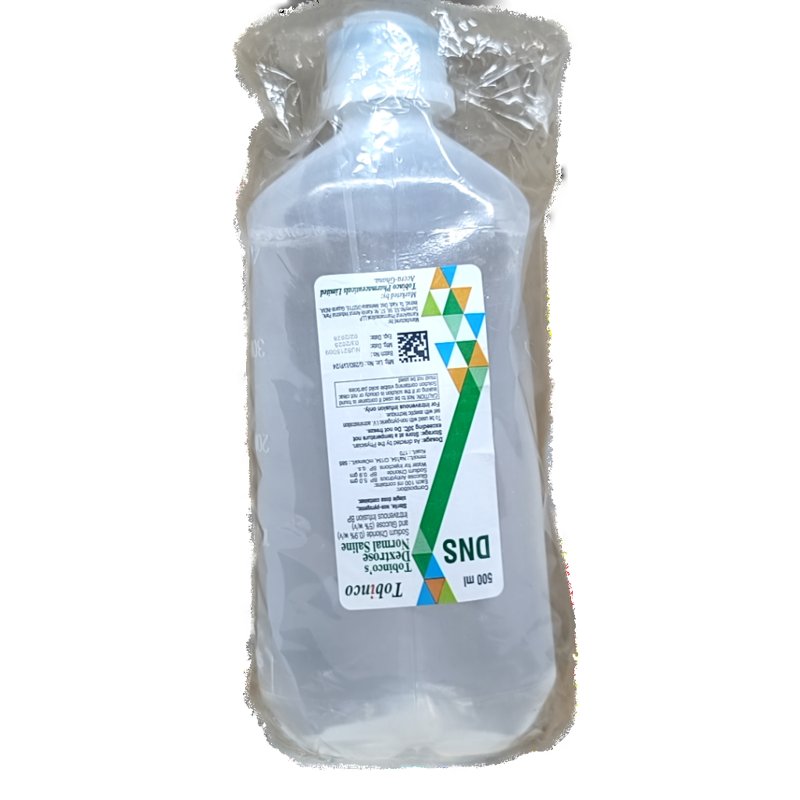
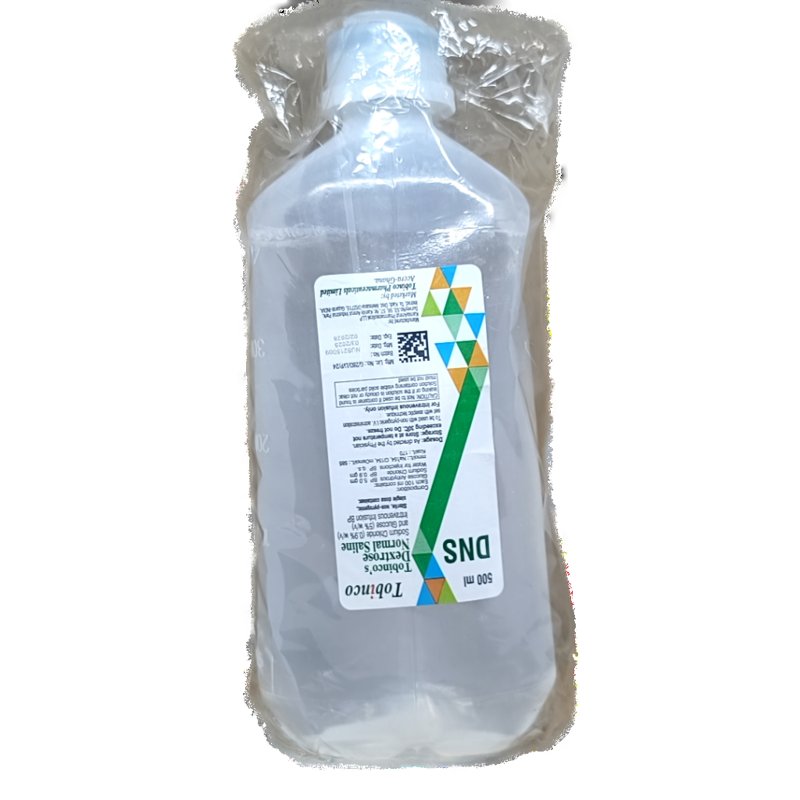
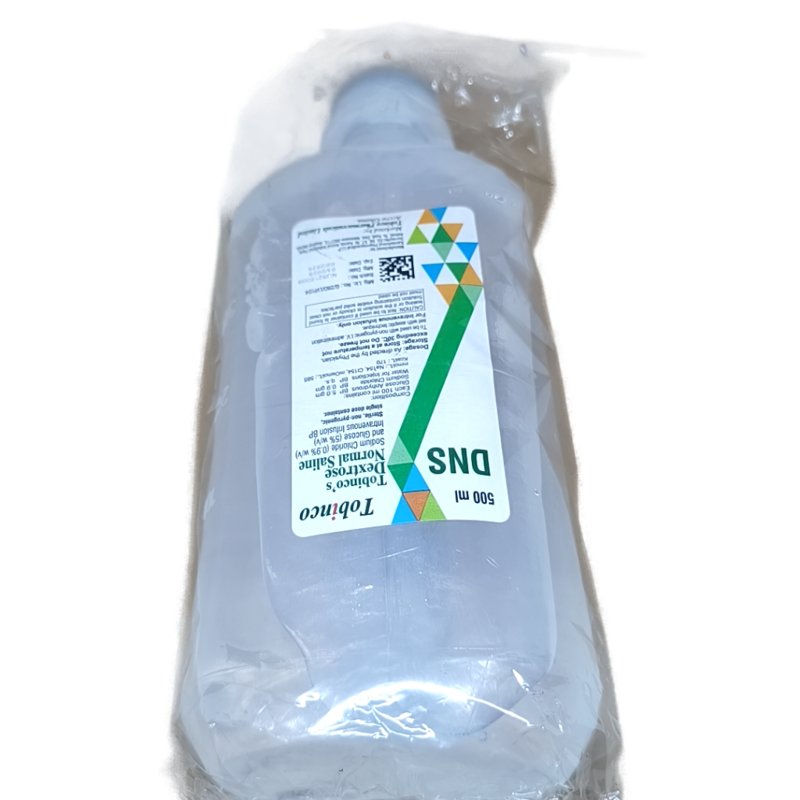
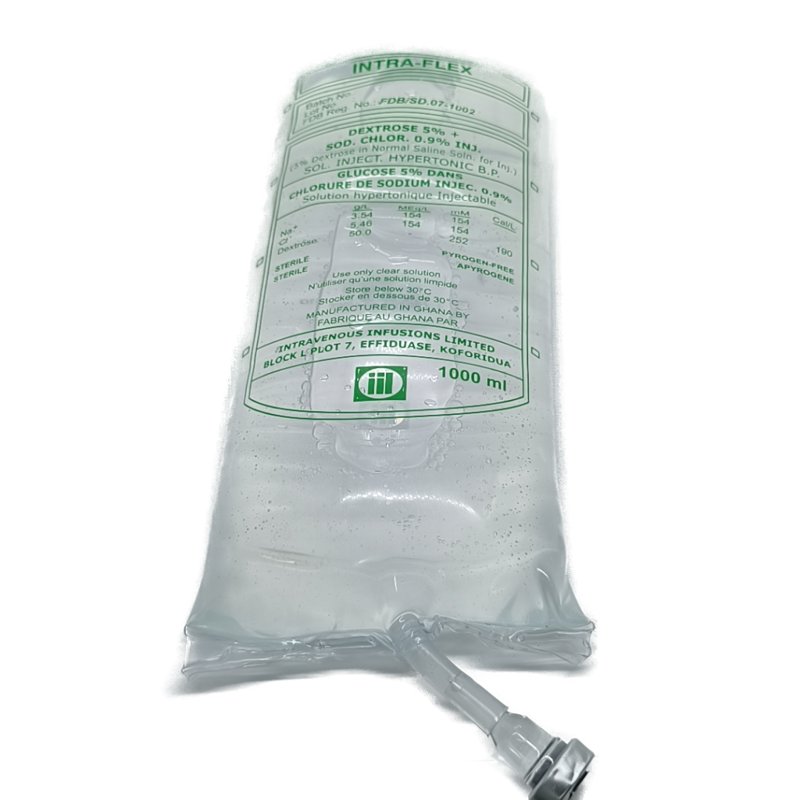
<div>💧 DNS Infusion (Tobinco) — Summary</div><div><br></div><div>Product name: DNS Infusion</div><div>Manufacturer/Marketer: Tobinco Pharmaceuticals Limited (Ghana) — infusion fluid for clinical use</div><div>Form: Intravenous (IV) sterile solution (usually supplied in 500 mL or 1000 mL bags/bottles)</div><div><br></div><div>🧪 What It Is</div><div><br></div><div>DNS stands for Dextrose and Sodium Chloride infusion, also called Dextrose Normal Saline. It’s a crystalloid intravenous fluid containing:</div><div><br></div><div>Dextrose (5% w/v) — a sugar (glucose) providing energy and helping maintain blood glucose levels</div><div><br></div><div>Sodium chloride (0.9% w/v) — salt that helps restore electrolytes and fluid balance</div><div>This combination makes DNS a balanced fluid for hydration, electrolyte replacement, and some energy support when given by IV in medical settings.</div><div><br></div><div>🩺 Common Uses</div><div>DNS infusion is used under medical supervision to:</div><div>✔️ Treat dehydration (when oral intake isn’t possible)</div><div>✔️ Restore electrolyte balance (sodium and chloride)</div><div>✔️ Provide fluid volume in patients with fluid loss (e.g., vomiting, diarrhoea, burns, surgery)</div><div>✔️ Supply a small amount of glucose energy (from dextrose)</div><div>✔️ Support patients unable to eat or drink, helping maintain hydration and energy status</div><div><br></div><div>💊 How It Works</div><div>Sodium chloride restores body fluid volume and electrolyte balance.</div><div>Dextrose gives a carbohydrate source (energy) and helps prevent low blood sugar when oral intake is limited.</div><div>Together they correct fluid losses and electrolyte imbalance more effectively than saline alone.</div><div><br></div><div>⚠️ Administration & Precautions</div><div>⚠️ DNS infusion is NOT for self-administration — it must be given intravenously by a qualified healthcare professional in a hospital or clinic.</div><div>Before and during infusion, clinicians monitor:</div><div>Fluid balance</div><div>Electrolytes and blood glucose</div><div>Heart, kidney, and liver conditions</div><div>People with fluid overload risk (e.g., heart failure, kidney problems) or diabetes require careful monitoring.</div><div><br></div><div>⚡ Possible Reactions / Side Effects</div><div>When used appropriately, DNS is generally safe. However, possible issues include:</div><div>• Phlebitis or irritation at the IV site</div><div>• Fluid overload if infused too fast or in large volumes</div><div>• Elevated blood sugar (because of dextrose) in patients with diabetes</div><div>• Electrolyte imbalances if underlying conditions aren’t monitored</div><div><br></div><div>🚫 Contraindications & Cautions</div><div>• Known allergy to any component</div><div>• Conditions with excess sodium or chloride</div><div>• Use in patients with uncontrolled high blood sugar requires supervision</div><div>• Not recommended alongside blood infusion through the same set (due to risk of red cell clumping) in some settings — this is determined by clinicians.</div><div><br></div><div>🧠 Important Notes</div><div>DNS infusion restores hydration, electrolytes, and energy simultaneously, unlike plain saline or dextrose alone.</div><div>It does not treat infections or other diseases by itself — it supports the body while other treatments work.</div><div>Volume and infusion rate are individualized for each patient by doctors or nurses.</div>
Medical Specifications
| Item Weight | 10kg |
| Refillability | No Refillable |
| Priscribtion | Does Not Require Prescription |
| Age Group | All |
| Item Use | Internal Use |
| Supplier | |
| Supplier Location |



John Doe – :
Fusce vitae nibh mi. Integer posuere, libero et ullamcorper facilisis, enim eros tincidunt orci, eget vestibulum sapien nisi ut leo. Cras finibus vel est ut mollis. Donec luctus condimentum ante et euismod.
John Doe –